
“Stevens claims conservative philosophy - United Press International” plus 3 more |

- Stevens claims conservative philosophy - United Press International
- Completion of Buckeye Technologies Energy Project Pushed to End of the ... - Market Wire
- Restoring constitution reaffirms Bhutto’s philosophy ... - The Gaea Times
- The Spirit Of Indian Philosophy - Indolink
| Stevens claims conservative philosophy - United Press International Posted: 03 Apr 2010 05:15 PM PDT WASHINGTON, April 3 (UPI) -- U.S. Supreme Court Justice John Paul Stevens, though widely regarded as a liberal justice, says his judicial philosophy is actually conservative. Stevens, who told The New Yorker in an interview last month he will retire from the Supreme Court within the next three years, was regarded as a moderate when former President Gerald Ford nominated him to the court in 1975. Although many of his decisions have cheered U.S. liberals, he told The New York Times Friday he considers his judicial philosophy to be conservative. "What really for me marks a conservative judge is one who doesn't decide more than he has to in order to do his own job," Stevens said. "Our job is to decide cases and resolve controversies. It's not to write broad rules that may answer society's questions at large." In an interview with the Times, Stevens, 89, did not announce a retirement date but he did say he needs to "fish or cut bait, just for my own personal peace of mind and also in fairness to the process." "The president and the Senate need plenty of time to fill a vacancy," he said. In an interview with The Washington Post, Stevens said he wants to make his decision on retirement "in a way that's best for the court." The White House expects a nomination battle in the Senate possibly as early as this summer, The Times said. Stevens' retirement will give President Barack Obama his second appointment to the court. The first was that of Sonia Sotomayor, who succeeded Justice David Souter after his retirement. Five Filters featured article: Chilcot Inquiry. Available tools: PDF Newspaper, Full Text RSS, Term Extraction. | |
| Completion of Buckeye Technologies Energy Project Pushed to End of the ... - Market Wire Posted: 30 Mar 2010 01:57 AM PDT SOURCE: Industrial Info Resources SUGAR LAND, TX--(Marketwire - March 30, 2010) - Researched by Industrial Info Resources (Sugar Land, Texas) -- Buckeye Technologies Incorporated (NYSE:BKI) (Memphis, Tennessee) has slowed the construction phase of a $45 million energy project at the company's pulp mill in Perry, Florida. Buckeyes' Foley Energy Project was previously scheduled to be completed this spring, but is now planned for completion later this year. For details, view the entire article by subscribing to Industrial Info's Premium Industry News at http://www.industrialinfo.com/showNews.jsp?newsitemID=157944, or browse other breaking industrial news stories at www.industrialinfo.com. Industrial Info Resources (IIR) is the leading provider of global market intelligence specializing in the industrial process, heavy manufacturing and energy markets. IIR's quality-assurance philosophy, the Living Forward Reporting Principle™, provides up-to-the-minute intelligence on what's happening now, while constantly keeping track of future opportunities. For more information send inquiries to pulpandpapergroup@industrialinfo.com or visit our website at www.industrialinfo.com. Follow us on: Facebook - Twitter - LinkedIn - Vimeo Contact: Five Filters featured article: Chilcot Inquiry. Available tools: PDF Newspaper, Full Text RSS, Term Extraction. | |
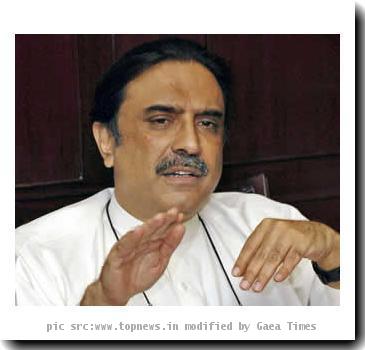
| Restoring constitution reaffirms Bhutto’s philosophy ... - The Gaea Times Posted: 04 Apr 2010 08:03 AM PDT ISLAMABAD - Pakistani President Asif Ali Zardari has said that the steps taken to restore the constitution, under which his own powers will be drastically reduced, reaffirms the political philosophy of the document's framer, the late Zulfikar Ali Bhutto, that the people alone are the legitimate fountainhead of political power. We pledge to continue forward our march to empower the people, the president said Sunday in his message to the nation on Bhutto's 31st death anniversary. Zardari said Bhutto had awakened the people and led the collective national effort to give the country a unanimous constitution that was federal, democratic and parliamentary in character to keep the nation united, Associated Press of Pakistan reported. Today… it is most reassuring that the nation is poised to restore (its) constitution by removing from it all vestiges of dictatorship, he said. Bhutto was executed April 4, 1979, after what many consider to be a kangaroo trial. This was after he had been deposed as president by then army chief Gen. Zia-ul Haq. Under the constitution's 18th amendment tabled in parliament Friday, the president will be bound to act on the advice of the prime minister, who will get back, among others, the power to appoint the armed forces chiefs and the chief election commissioner. These powers had been taken away by then president Pervez Musharraf by the 17th amendment that he rammed through parliament in 2002. Zardari will address a joint session of parliament Monday, after which the National Assembly, the lower house, will take up consideration of the 18th amendment. It is expected to be passed by more than the required two-thirds majority, after which it will go to the Senate. Zardari is expected to sign the bill once it clears the upper house. The 18th amendment will strip Zia-ul Haq of his title of president of Pakistan and remove the current bar on a prime minister serving a third term. According to Prime Minister Yousuf Raza Gilani, the amendment will also empower the provinces, leading to good governance and political ownership. Under the amendment, the president will not be able to dissolve the assemblies in future and can do so only on the advice of the prime minister. Then, the prime minister and the provincial chief ministers will be elected by their respective legislatures by a show of hands against the current provision of secret balloting. Also, a caretaker chief minister will be selected by the provincial governor in consultation with the chief minister and the leader of opposition in the outgoing assembly. Under the amendment, the North West Frontier Province (NWFP) would be renamed Khyber Pukhtoonkhwa. Five Filters featured article: Chilcot Inquiry. Available tools: PDF Newspaper, Full Text RSS, Term Extraction. | |
| The Spirit Of Indian Philosophy - Indolink Posted: 04 Apr 2010 01:15 AM PDT | The western thinkers point out that India has no proper and accurate records of philosophy, there are philosophical thoughts that do not go beyond the mythological stage and do not make philosophy as a thorough going system of thought. It remains simply limited to mythology and ethics. They fail to find any proper historical records not even the biography of its thinkers and seers. Alburey Castell believes that the Greek thinker Pythagoras in the 6th. Century B.C. was the first ever philosopher, 'the lover of wisdom. The western view is based on incorrect information and untruth .It betrays colossal ignorance of ancient Indian thoughts. Its achievements are very imperfectly known to them even today. It may be that the philosophical thoughts in the western evolution may have resulted in a somewhat coherent type as of today but the Indian thought of old definitely represented a superb universal thought of that day. Most of the Indian thoughts in earlier stages existed in a very undifferentiated stage. We witness many schools of thought and criticism of various schools and find each system more differentiated and coherent. Unfortunately most of the systems of thoughts in many cases are lost. India never considered chronology as primary to philosophical interests, which was its main concern. The rise of philosophical thoughts in India has entirely been very different from that of the west. We do not notice system of thought preceding or succeeding each other as in the west. The Indian system developed in richer and better form side by side and supplemented each other. Almost all thinkers dealt with the same system, same thoughts similar to each other unlike the development in the west. Indian philosophy has a long history of continuity and developmental process, longer than any other. Unfortunately continuous foreign brutal invasions and deliberate destruction of scriptures and culture by these brutes, the chronological sequence has lost its distinct trace. Moreover our sages and seers were never inclined to and appreciative of autobiographical writing. Their emphasis remained on the subject of their experience, teaching and realization. Though much of it is lost yet whatever is left, it is sufficient enough to claim that the Indian philosophy of wisdom is the oldest living thought of those eras. The ancient seers preferred selective teaching. It is difficult to translate it in English for the west. Even if some do, he has to be quite at home in Sanskrit and the ways of expressions of those days. Without it, the English rendering of Sanskrit works will not be judicious and authentic. All such translations made before need revaluation, as in many cases they were done with a set purpose of distorting Indian values so as to facilitate conversion. Even today there remains a lot of philosophical works to translate. The job is not easy to achieve. The Indian mode of expression and technical and philosophical terms have no proper English equivalents. E.g., take the Sanskrit word ' sat'. The Greek equivalent is 'to ov '. The German word is ' seiende'. In English, we are bound to use ' that, which is', what exists or what is real. The English is the language of technology and commerce, and not of philosophy or metaphysics. The knowledge of Sanskrit is pre requisite. Dr. Das says,' A man who can easily understand the Vedas, the Upanishads, the Puranas, the Law books and the literary works, and is also well acquainted with the philosophical thoughts of European philosophy, may find it literally impossible to understand even small portion of a work of advanced Indian logic or the didactical Vedanta.' He gives two reasons to substantiate:
So in the absence of any judicious translation work and non-prejudice outlook, the west remained deprived of the knowledge of proper Indian thoughts and its deep- rooted philosophy. This ignorance has led them to think otherwise and miss the right conclusion that the Indian philosophy is the oldest living thought as of today. The most ancient Indian philosophy is contained in the four Vedas -Rg. Veda, Yajur Veda, Sama Veda and Atharva Veda. The period of Vedas is debated but can be dated to 4000B.C. or even earlier. Each Veda has four parts—Samhita, Brahmans, Aranyakas and Upanishads. The seed of philosophical knowledge is sown in Rg. Veda hymns. They are the forerunners of monastic system as is evident in the Upanishads. Samhitas are hymns or prayers. Brahmanas are mostly prose treatise, discussions on rituals and are devoted to sacrificial duties. Aranyakas provide ritual guidance to the retired seniors in seclusion. The Upanishads are deep rooted in philosophical thoughts of the realized seers. Poets composed the hymns, priests the Brahmanas and the seers the Upanishads. Next comes the Epic age philosophy as seen in Ramayana, Mahabharat and Geeta. We notice a philosophy linked with life and worldly affairs .It is full of social and ethical values. . Mahabharat describes elaborate social order and the four fold aims of life of righteousness, wealth, worldly enjoyment and salvation. It also describes the four stages of life. It is thus a history, a mythology. Politics, philosophy and law, all in one. Ramayana gives us a vivid idea of human relationship in its various spheres. Two more works of different ages need our attention—The Manu Smrti and The ArthaShastra. Manu was the first law- giver and deals with wide-ranges thoughts of social order and the duties of ruler's .He codified the entire social code. Kautilya (Carakya of Maurya dynasty) is the author of Arthashastra, a treatise on science of economics and politics. It deals in details on the nature of sovereignty, representation, war and peace, code of punishment, taxation, state function and police. Then there dawned in Sutra period .It is in this period that the systematic and logical philosophical thoughts are evident. It is known for an orderly, systematic, consistent and logical sets of brief aphorisms, fathom deep in philosophical thoughts. The philosophies of Naiyaya (Logical relation) Vaisesiki (Realistic pluralism), Samkha (Evolutionary Dualism), Yoga (Discipline of Meditation), Purva Mimamsa (Investigation of Vedas of early period), and Uttar Mimansa (Vedas in the later stage and the Vedantic period) are six great schools of thought. These systems are prior to the Buddhist period though some of their elaborate works came to light after Buddha. There has been continuous stream of philosophers from the earliest times of 4000B.C. Or even earlier unto the 17th. Cent, accompanied with an unbroken chain of teachers, thinkers and pupils The scholastic period proceeding the six philosophical schools, is known for a number of commentaries on the sutras explaining their viewpoint on life and world. There were as many commentators as were the schools of thought. Each school presented its own viewpoint as the only accurate and logical one. This led to the feeling of intolerance of other's viewpoint. Jealousy among these schools developed. It was the time when Samkarachaya appeared on the scene as a rare and unique force of integration. He succeeded in removing confusion. His commentary on Vedanta Sutra overtook the highly praised philosopher and writer Badarayan. Samnkar infused new life in the philosophical thought and its interpretation. His efforts brought about higher evolution in thought and a philosophical binding force. The other important names of the period are – Gaud pad, Kumaril Bhatta, RamaNuj, Udayan, and Madhava.and Jayant. The Mogul invasion and their brutal rule totally smashed most of Indian philosophical works. The library of Nalanda in Bihar was set ablaze and burnt for months. The British rule was no different .It planned the translation of Hindu scriptures in such a way that may lead the elite away from them and near Christianity. Fortunately there existed a line of thinkers, sages and associations like Arya Samaj, Brahmo Samaj, Ram Krishna Mission and the like. They revived and rejuvenated Indian philosophy and cultural thoughts. The revival of Indian consciousness, of the greatness of its own philosophy of its glorious past as of today can now be witnessed after fifty years of Indian freedom Among the modern thinkers Dr. Radha Krishna and Yogi Aurobindo occupy unique place. Some distinct attributes and characteristics common to all the philosophical thought are:
Five Filters featured article: Chilcot Inquiry. Available tools: PDF Newspaper, Full Text RSS, Term Extraction. |
| You are subscribed to email updates from Philosophy - Bing News To stop receiving these emails, you may unsubscribe now. | Email delivery powered by Google |
| Google Inc., 20 West Kinzie, Chicago IL USA 60610 | |

0 comments:
Post a Comment